

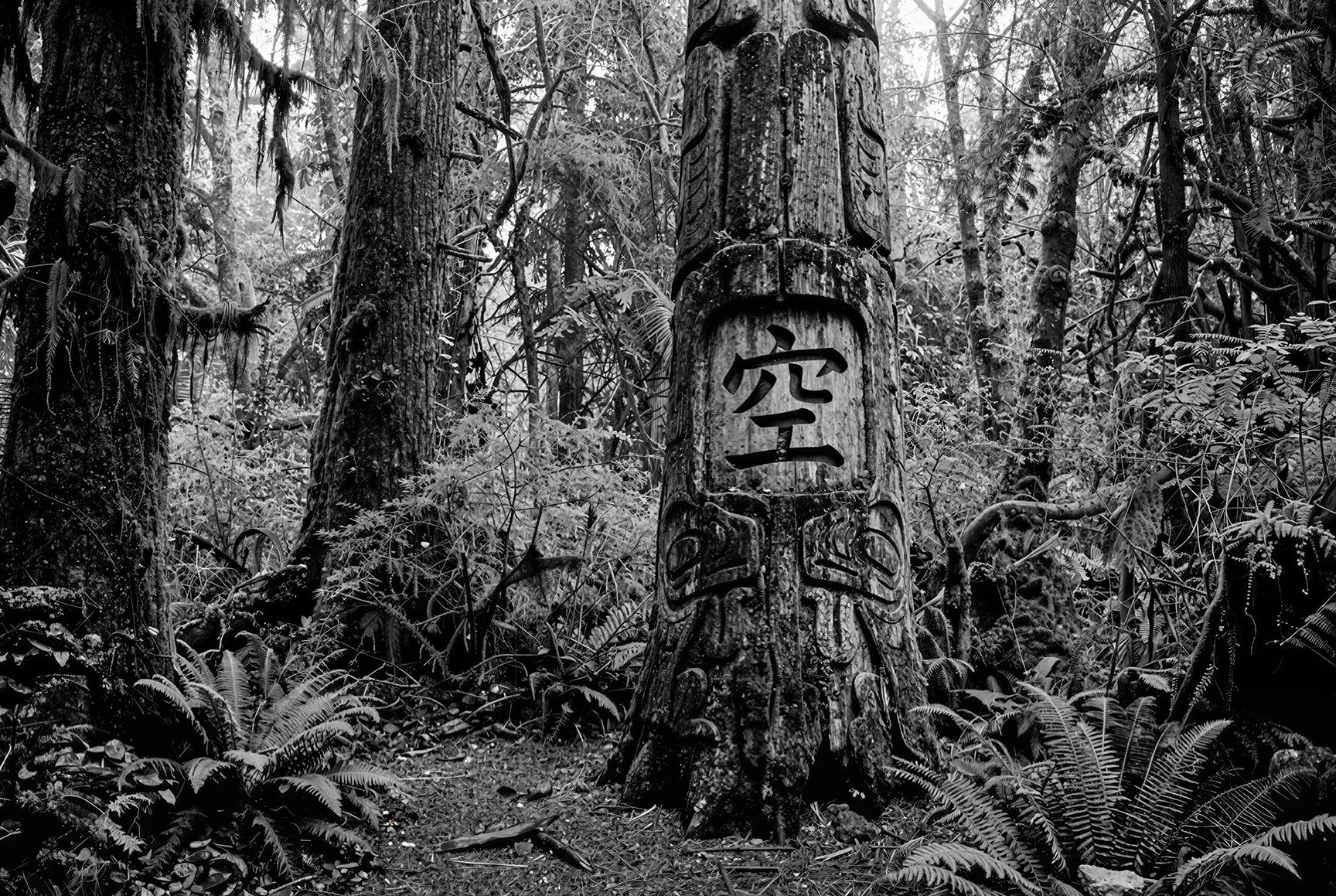
Based on a true story
A person’s house is a blueprint of their soul. Gus’s blueprint was made of ashes. You opened the door to his apartment and the smell grabbed your throat like an old sergeant with cold hands. Dust thick as the countertop of a cheap bar lay over everything, bonded to objects by time and the oily gravity field of ten thousand menthols. The TV had cataracts and a plastic grocery bag hung off a closet doorknob with the droop of a retired ghost.
From the street his curtains were a darker shade of blue than the rest of the block. His windows were the color of a Salem bruise. After Salems, Gus smoked Bright which were 1% tobacco and 99% industrial mint strong enough to strip a lizard off a stone.
He even wrote the company when they changed the blend. His letter began, “Dear R.J. Reynolds, Yer killin’ me!”
Gus was mailing ransom notes to his own address.
His bathtub was a small-town cemetery of abandoned electric can openers and Tupperware lids, a cracked plastic hairdryer and a toaster with the cord coiled like a daydreaming copperhead. A dead neighbor’s old wheelchair was the centerpiece. No human was bathing in that tub, so it must have happened at the sink. I imagine him there splashing hot water on his musty pits while steam hides the mirror from his eyes and a hand reaches out feeling around for a washcloth it’s okay to use just one more time.
In the kitchen a single working burner on his stove held out like a lone survivor from the era of linoleum and quaaludes. His stove had become a 300 pound cigarette lighter. A terrifying looking microwave most likely made breakfast, lunch and dinner judging by the scatter of frozen dinner boxes piled by the trash.
Across the living room was a small shrine of unopened porn DVDs, shrink-wrap unviolated, with big tits and neon exclamation points winking urgently for your eyes. He’d order them on dial-up TV in the night and stack them in a corner like broken promises he didn’t trust himself to look at.
I hadn’t been there in years. He stopped asking people to come over around the time Reagan was shot. First time I returned after a decade away, it only took me two minutes before I stepped back into the hall and called his eldest daughter.
“Rhonda,” I said, “it’s time for an intervention.”
There was no crying. Rhonda didn’t sigh dramatically or ask what it all means. She said thanks and hit the road from Eugene. The three sisters had “Gus’s shitshow apartment” emptied of their father’s litter and fantasies inside two weeks. They put him in a van with a one way ticket to a care facility where the bathtubs worked and the nurses spoke in quiet voices that never quite reached the center of a man who had learned Chinese because he was so lonesome.
In the nursing home? Hummingbirds have farted longer than Gus lived.
He kept asking them how long he had. “A year or two… easy…? Come on!”
The nurse checked his eyes with her penlight and asked if he really wanted to know?
“Tell me.”
“Six weeks,” she said.
He was dead in two. I’m to blame. That’s why I’m writing this.
Gus was short but handsome. He had a wrestler’s chest, crushed your hand when he shook it and was the sort of small dude at the party who’s game for anything from a poetry reading to cocaine at midnight. In L.A. he fell in with Cassavetes’ acting workshop - that 1960s temple of the gorgeous and destroyed where you pretended until you cried or bled and the people in the cheap seats called it art. Everyone was stoned as a fucking sunset. Gena Rowlands was a high-heeled hurricane, and once? When she lit Gus’s smoke between routines as they sweated on the sidelines… he thought he’d been blessed by the divine. It was never about talent. It was about being there. Casting directors love it when a young person has nothing left to lose, so he got bit parts as junkies and street hoods. He fit right in.
Before Cassavetes, Gus was a medic in the Korean War. He dodged bombs and snipers and the clap and drank moonshine and always seemed to owe the mess officer a $20 while daily dosing the injured and the dying with morphine. He went over there with a shit ton of hope and a big smile, but it wasn’t long before his own needle got him.
We all have our battles. We all come home to someplace. Gus came home to west Oregon with frostbitten toes and traded part of the sky for a dump truck full of bombed out morality. He got a check from the VA for his trouble and somehow saw that as fair. All that remained was destiny. And Gus carried destiny in his pocket everywhere he went like a hidden, panicked weasel.
Back in Portland, Gus found a new medicine in the words of the old water book, Tao Te Ching. He taught himself Chinese in his kitchen. He learned illustration. He surrounded himself with scattered index cards lovingly inked with characters that looked like tiny gazebos and supplications, each one created in a pagoda that smelled of burns, coffee and Ronsonol. The cards were cleanly drawn by a hand so steady it had no business being in that apartment. Every line looked like it was placed by a man getting ready for company, but by then I was his only visitor. He’d slap down a card and exhale menthol wind and tell me how to surrender to the wisdom of the universe. Stop trying, be reactionless. The river does not ask permission to make a canyon.
He was not a dabbler and he wanted you to know it. Gus had a hierarchy that made it hard to hang. Fung Yu-lan was the greatest Chinese mind of the century! That was not open for discussion. And if you hadn’t read the man’s two volumes? Fucking hell. Then you were welcome to sit there and listen while somebody enlightened did the talking.
He and his wife loved eating hamburgers and giving money to animal shelters they couldn’t afford to donate to. Misanthropes naturally gravitate towards this union of destruction and philanthropy. The human species disappoints, cows were born to die, and dogs could do no wrong. All three girls came out the same. Rhonda has still never driven past a stray on the shoulder she didn’t bring home to foster.
Along with dogs and cigarettes, Gus loved women with the piety of a reckless schoolboy. His brown, sad eyes overflowed as his whole body leaned into the imagined promise of romance. He had thick black hair that refused to thin or gray, like it hadn’t gotten the news about the rest of him. He did an Elvis impression that made waitresses blush, a few bouncers too. And if you told him you had Dream Lover queued on the jukebox he’d light up with a smile that made the whole room feel like Saturday night in a town with nothing to offer but ass kickings in the alley, or pie.
The last time I saw Gus totally lucid he was in a narrow hospice room that had once smelled of fresh lemons. He held court for an audience of me and drank grapefruit juice through a straw like it was whiskey.
“Bad news,” he said, thumping his chest. “There’s a squatter in here. He moved in when I wasn’t paying attention. His name is Yu-huang, the Jade Emperor.”
“Fuck him,” I yelled. “No kings! Raise the rent.”
He laughed a bellicose laugh and then lost control, birthing some green phlegm onto a napkin. We both pretended not to notice, and after the coughing fit he carried on talking about acting. He talked about Cassavetes like a father he chose. He talked about that one nurse’s number and how he couldn’t forget it. She broke his heart. He asked me to play Mack the Knife. I stuck my phone in a pint glass and let the echo of Darin’s swagger fill the room.
“Remember when we were on welfare in Eugene?” he asked. “Two courageous lords in paper crowns arguing about mystical stillness like it was a brand of soup?”
“You know more about Chinese than I do about courage, that’s for sure,” I answered.
“Courage is just refusing to rehearse your last line,” he said. “You’ll be fine.”
There was a thing with Gus: he made love and death into a couple that bickered but never broke up. He said the only way to love anyone, be they a woman, friend, God, or the long dark wailing of night, was to stop insisting on expectation. He said the Tao taught him the same thing Cassavetes did: open your gates and let the river inside you speak.
The intervention wasn’t cinematic. It was my call that had landed him in the lemon room. There was no weeping montage of sincere reflections that morning. Just his three rose-cheeked and soon dusty daughters with contractor bags and masks, a locksmith with a peg-leg and an eagle tattoo who charged extra, and me carrying a box labeled KITCHEN that turned out to be ninety percent filled with ashtrays. And an ash-littered paperback copy of Tao with a broken spine.
Gus went willingly. The bathtub surrendered its hostages with a clatter. The porn DVDs went into a bag with a sound of unspun betrayal. I took one, slit the wrap and held the shiny disc up to the light until I found the rainbow. It was pristine, like a vow the world had yet to break.
The neighbors watched from the hall, lidded eyes glooming with pity. You could see it in their faces. They were glad it wasn’t them. But they were also curious to get a look at how it was going to be when their own ticket got punched. A woman with blue hair in curlers wearing orange crocs and a SpongeBob SquarePants themed robe wanted to talk about property values until Rhonda looked up and smiled in a way that froze the sentence in the lady’s throat. She retreated colorfully into the gray shadows.
“Why didn’t he open any of these?” the youngest daughter asked, holding up a DVD of a busty female cop licking a baton.
“Your dad just liked the idea of being bad,” I said. “But he wasn’t bad. You know, it’s safer to put a symbol on a shelf and fantasize.”
“Dad always did love his symbols.” There was a certain temperature to her words. She dropped the DVD back in the bag.
The memory of that stubborn apartment has still not left me. I could have not made the call, but who would I be then? Dust is the Anthropocene’s dandruff, and Gus wore it like the fur coat of a bear he had murdered in a forest before the world was tamed. People leave, objects stay, and dust endures like Keith Richards.
Dust is loyalty in powder form. At least that’s how I explained it to myself when I finally got out and realized the smell of God had crawled up in my clothes.
Back at the care home he tried charm first, then insults, followed by apologies, pretty much as it had always been. Some of the nurses had tree names like Willow and Aspen. Others had tattoos of rivers and moons. He called them darlin’ and wasn’t afraid to ask them what death was going to feel like.
Gus knew where he was.
“One lady told us it’s like a ferry made of mist that nobody tells you is your taxi,” replied the nurse practically. “And suddenly it’s at the curb.”
“What if you don’t have fare?”
The nurse smiled in a winsome way. “This fare is free, Gus.” She perked up. “But let’s not get too mystical so early in the day!”
The nurse walked off and he looked at me like she’d just given him permission to exhale. “You got six weeks, tops, is what she meant to say,” he spoke softly. “Fuck. Six weeks is half a season.”
“Saturday is a season,” I said as brightly as I could, hands in my pockets. “If the weather’s right and you’re evangelical?”
“True,” he said, smiling. “And my weather outlooks have always been notoriously fucked.”
“Amen.”
I brought him some Céline one afternoon. Castle to Castle, the one about the Vichy government running out of France ahead of the Allies and washing up in one German castle after another to argue about the food. Gus couldn’t hold a book by then, so I read it to him.
It takes Céline a hundred pages to get around to the war. He spends the opening bitching about his publisher, the man who was printing the book and paying him to write it.
Gus laughed until he lost the thread of his own breath.
“Your boy was a collaborator,” I said.
“My boy was a doctor who wrote like a house on fire.” He found his air again. “My wife had him pegged, though. She said Céline hated everybody. Jews were just at the top of the list.”
Gus then told me about a scene with Gena Rowlands where he forgot his line. He’d made a face on the spot that saved the moment because it was honest. He told me about a woman with a laugh and a kiss that made him want to sell his soul. Then he told me about his ex-wife. Janine. She took seven years of his life and gave him his three girls. Back then he left.
He told me about the last time he sat beside her. It was the year Tammy Faye was on every channel, mascara running down the national face.
“Did you hear the news?” he’d asked Janine. “Tammy Faye is afraid God won’t recognize her if she dies without her makeup on.”
“She’s a very sick woman,” Janine said.
“No, Janine. You didn’t hear me. She’s afraid that God won’t recognize her.”
“She’s a very sick woman.”
He was still working the bit all those years later, and it still didn’t land. And dying before me now, he wept, and you could feel the aching cathedral behind his words finally throwing its doors open to the sun.
“She wouldn’t be gone if I’d stayed.”
“It’s not your fault, Gus.”
I lied. It was his fault.
He asked me to hold up the Tao for him. He ran his finger over the character for empty. Empty looked like a roof over nothing, and I loved that. He loved it, too.
“I always thought emptiness was a crime,” he said, looking around him. “Turns out it’s a room with clean windows. I’m fucking dying for a smoke, man. You know?”
“I get it.”
“Maybe you can bring me just one? Later?” His yellowing brown eyes pleaded, “I won’t tell.”
I touched his hand. “I’ll try, buddy.”
That night he died, sudden and quiet as a falling feather, like an apology to his daughters. The nurse with the moon tattoo on her forearm found me haggling with a vending machine. She gave me the news.
“He kept saying a word I didn’t know,” she said. “Sounded like Dow.”
“Tao.” I nodded with appreciation. “It’s a river that refuses to make a fist.”
“I liked him,” she said. “Even when he was rude.” She looked guilty, as if her words might bite her. “I’m sorry. That came out the wrong way.”
“It’s okay. Gus was an asshole. And easy to like,” I said. “He was great at being human.”
She smiled and disappeared. I turned back to the machine. It had eaten my dollar.
The funeral was a cardboard cremation box and a good playlist at the bingo hall around the corner from Gus’s apartment. We didn’t pretend the box wasn’t just a little too small. We put a photo of Bobby Darin on a folding table with a black checkered tablecloth over it. Next to the photo was a laptop playing a crackling Super 8 video of Gus reciting a few lines from his bootleg Tao translation in a kitchen in ’74, ash falling across the counter as he tried to find background music on the radio that wasn’t western. He never quite tuned into the right station on that tape. He’s found it now though, if there’s justice.
People got up and told stories. Little ones, the ones that matter. Like the time he jumped out of a booth in a diner and danced with a smiling waitress to no music. Or the time he showed the neighborhood kids how to backflip without breaking their necks while holding a smoke. And again, everyone’s favorite story - the time he wrote a letter to his cigarette company with more genteel tenderness than any words he ever mailed to a human.
“Yer killin’ me!” we read in a chorus, and everyone laughed so we could have fifteen seconds of air. Alcohol and nicotine got us through the rest.
Privately I kept thinking about those DVDs. Was that where love ended up? Lost inside a factory LA promise cooking under plastic? Maybe he didn’t want the cheap heat of the movies. Maybe he wanted a pearlescent imagining. He wanted to hold possibility in his hands without risking the sweaty letdown of the real thing. Gus bought sex in a box and turned it into his own personal Jesus.
Still, my friend knew love. It’s important to me that you get that. He knew more of true love than many a married man. He loved anything messy, anything loud, leering, stumbling or half-holy. He loved the Tao. He loved girls in sundresses and a cold beer at 4 o’clock. He loved acting even after it dumped him. He loved the peppermint monkey wrench of menthol and phrases that sounded better than the realities they advertised.
He always loved his daughters, who blamed him as children must blame a negligent parent. The girls had finally showed back up full of practical intentions and swallowed feelings when they got the call. They arrived and departed like soldiers, quiet and focused, as if they had been rehearsing for the role.
Gus loved. And love is a sloppy, omnivorous verb. But it’s the only one that matters in the end.
I kept his dictionary of Chinese characters. It now sits on my shelf like a brick full of devotions I’ll never understand. Sometimes I open it to a page he touched, where an ash burn halos a meaning and I can imagine the smoke tracing a temporary ideogram in the kitchen air. I run my finger over the groove his finger dug. I say the word out loud and it fails to pronounce itself correctly.
But trying feels like a prayer.
On the day we cleaned the last box out of the apartment, the sun roared through the blinds like a pissed off dragon. Dust rose, turning the air gray-gold before it filtered back down again in a cascade of artificial rainbows. When the room was finally empty, our footsteps echoed. The expanse felt ominous. I stood where the porn tower had flattened the carpet and felt a shiver of ridiculous guilt, like the corner itself felt betrayed. Probably that was just us. On the way out I shut the bathroom door without looking. I’d seen enough.
In the parking lot, Rhonda took my arm.
“Was he happy?” It’s a question that always comes late.
“Well, he was alive,” I replied. “He did it his particular way.”
“That’s not the same as happy.”
“No,” I said, meeting her eyes. “Not everyone gets to be happy. That’s the deal.”
She nodded. But it wasn’t enough.
Weeks later, I dreamed I was back in that living room. The walls were clean and white and the dust shimmered like a million tiny yeses. In the center of the room was Gus in his young, deep-chested stance, the Elvis wave intact, hands open as if he were divining. He didn’t speak. He turned toward the window and looked out. On the other side of the glass a river flowed up a mountain. He looked surprised, then delighted. He turned and lit a cigarette I had between my lips and I felt the cottony mint sting my mouth as his Zippo snapped shut with the sound of a slamming door. I flinched, then opened my eyes and awoke, back to this world where we keep each other from drowning by admitting the water is cold and we’re just afraid.
Afraid of what?
What is death if life is love? The necessary counterweight. The balance of the great book. Death is a good editor. He walks into your apartment with a red pencil and lines out everything you didn’t get to finish. Then he circles what remains, labels it for storage, and places it into the palms of the people who remember you best.
A person’s house is a blueprint of their soul. Gus’s blueprint was made of ashes. And a river ran through it anyway.
The last thing he said, the nurse told me later, sounded like Tao.
He said it like a man discovering the name of a lover he’d been kissing in the dark. He said it soft, then softer, then not at all. I like to imagine the river replied. Not with words, but with a light that made beauty out of dust, shining and holy as a first breath or a last.
· · ·
PS - I keep one of Gus’s letters in my copy of A Sourcebook of Chinese Philosophy. He mailed it in the spring of 1982, after I sent him a clipping about Ken Kesey going to China.
Apr. 28, 1982
My Dear Pal,
Just received your quickie. Good to hear you’re all still afloat, even if limping. $100 a week is pretty limp at that. So? What about the Salem plans? Didja scrap ’em, or just not gotten around to working on them yet?
On the Kesey run to China. First, thanks for sending me the clipping. However, it reveals that ole kickapoo Ken never did take his hopped-up foot off the Pranksters day-glo gas pedal. He’s still swilling in adolescent sand-box tripping. His flip prose and non-encounter with Dr. Fung leaves me with coffee leavings on my palate. A juiced-up “writing” exercise.
Fact is, Fung Yu-lan is undoubtedly the greatest Chinese mind of the 20th century. His 2 vol. Hist. of Chinese Philosophy is to this day the Bible on that subject. I would give (hyperbolically speaking, of course) my left nut to meet with that man. Kesey has the great good fortune of getting into his household and all he can do is jerk off. He said he was embarrassed by the tape play-back. He’s a fool. (I’m a fool myself, so I’m fully qualified to spot a fellow traveler.)
All I got from the thing is how fucken hip and flip Kesey is. He oughta throw his fucken I Ching in the fucken toilet. I mean, he actually got to speak with the Man, the pinnacle of living Chinese philosophy, and what does he do? He plays a charade in cool. Perhaps all the acid is eating away at his brain, I don’t know.
Anyway. I hope he had a better time of it with the marathon run. Looks like that’s about his speed. At the least, he coulda let us know what blend of tea Dr. Fung used. Right?
Celine, yeah. Now there was a pisser. From whatever height.
Stay loose.
Chow, G.